
 by
by Sustainability, Resilience and Wellbeing: under this motto, some 150 researchers and policy makers gathered in Cork to reflect on the status quo of higher education. And despite what the name suggests, the European Higher Education Forum offered a wide range of insights from around the world. Kim and I were there to share our views on recognition and rewards in an interactive manner.
In search of connection
Closer contact between policy and research is not only desirable, but necessary. So notes key note speaker professor Ellen Hazelkorn, who opened the EAIR Forum. According to her, higher education researchers have not managed to connect to the needs of policymakers, and she finds this a major shortcoming. Higher education research, so professor Hazelkorn went on to note, touches on all manner of important policy issues, from migration to climate change. She called for more room for alternative career paths in academia to give academics the opportunity to work directly with policymakers. Incidentally, she also referred to Recognition & Rewards with due praise.
Global issues
Professor Hazelkorn’s call was echoed several times over the next two days. The programme spread across the full breadth of higher education research: from insights into the growing political influence on higher education in Hungary, to the emerging role of societal impact in Indian knowledge institutions, to managerial responses to AI at Norwegian universities. Besides lectures, there was also room for discussion. For instance, Frans Kaiser, our colleague at the University of Twente, led an open group discussion on university rankings. There were a number of valuable perspectives from the Global South. In South Africa, for instance, rankings had played a role in boosting small universities, while in Brazil they were part of a political attack on the higher education system.
The road to reform
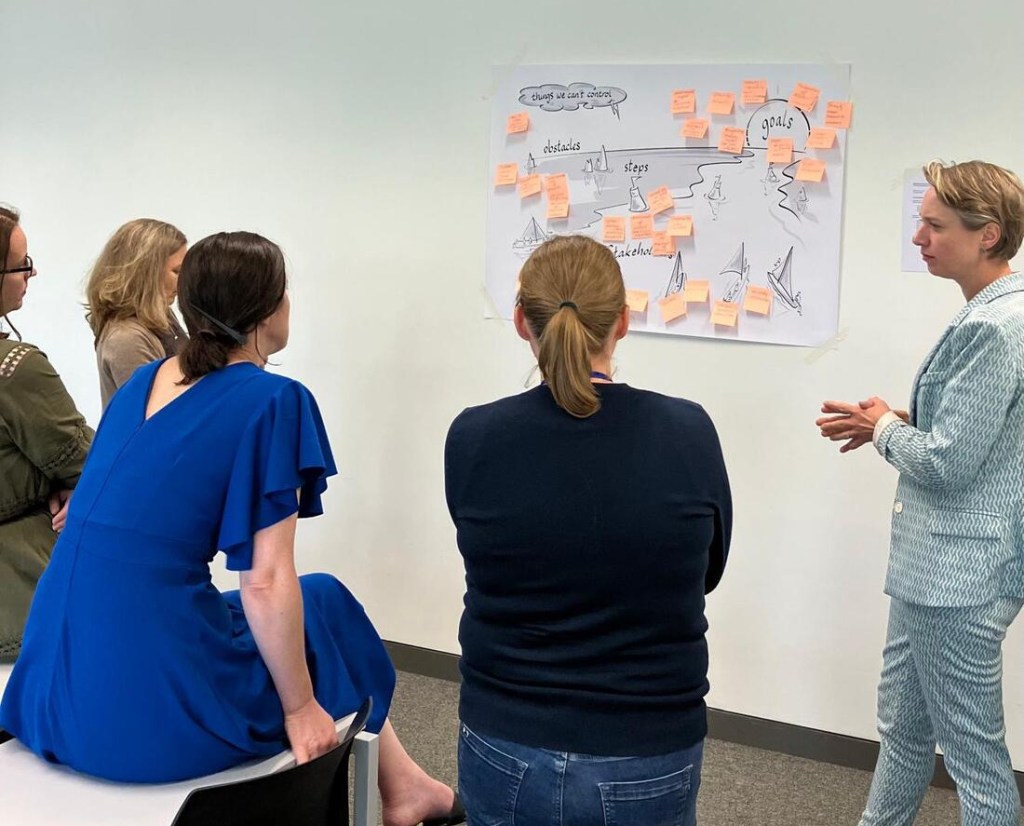
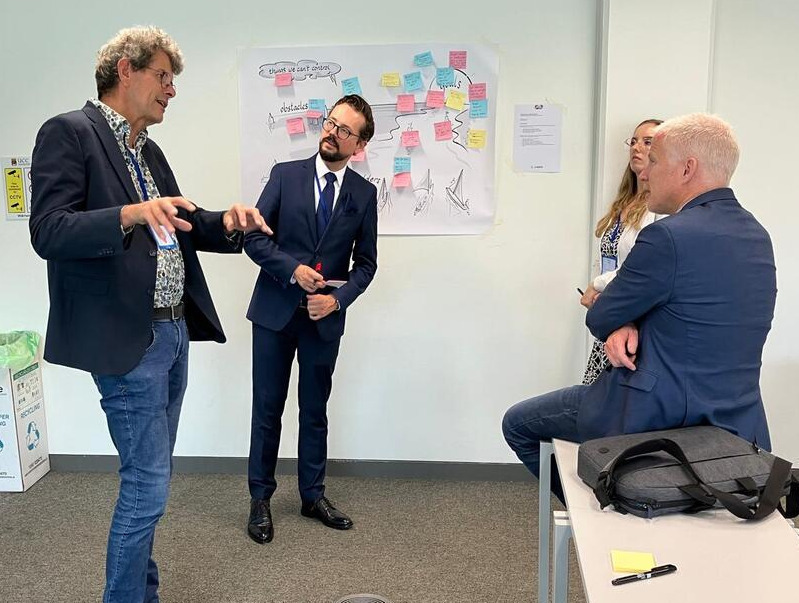
That same atmosphere of candour was also evident at our own workshop. Armed with posters and post-its, we challenged our international participants to dream about a better future of recognising and rewarding academics. We asked them to formulate not only ambitious plans, but also a concrete roadmap to realise their ambition. An encouraging observation: the desire to reform (the assessment of) academic careers is also widely supported outside the Netherlands. Participants from Brazil, Ireland, Germany, the Netherlands and elsewhere quickly agreed on what they wanted to change. This led to a fruitful discussion on the how, with practical ideas (“Our university mission should play a greater role in our human resources policy”) and stimulating suggestions (“Can we use AI to counter the dominance of English in academia?”).
Irish contacts
The typical Irish weather outside the doors of University College Cork – rain and wind, even in August – was more than made up for by the warm welcome from our Irish hosts. Between cups of coffee and slices of soda bread, there was also ample opportunity to discuss Recognition & Rewards with our Irish contacts. There is considerable interest in our programme in Ireland, and especially its practical application. And so we were soon exchanging evidence-based CVs and career path modules. It quickly led to another invitation to speak at the Royal Irish Academy in November: a great opportunity to spread the ideas of Recognition & Rewards further in Ireland.
Leave a Reply