
 by
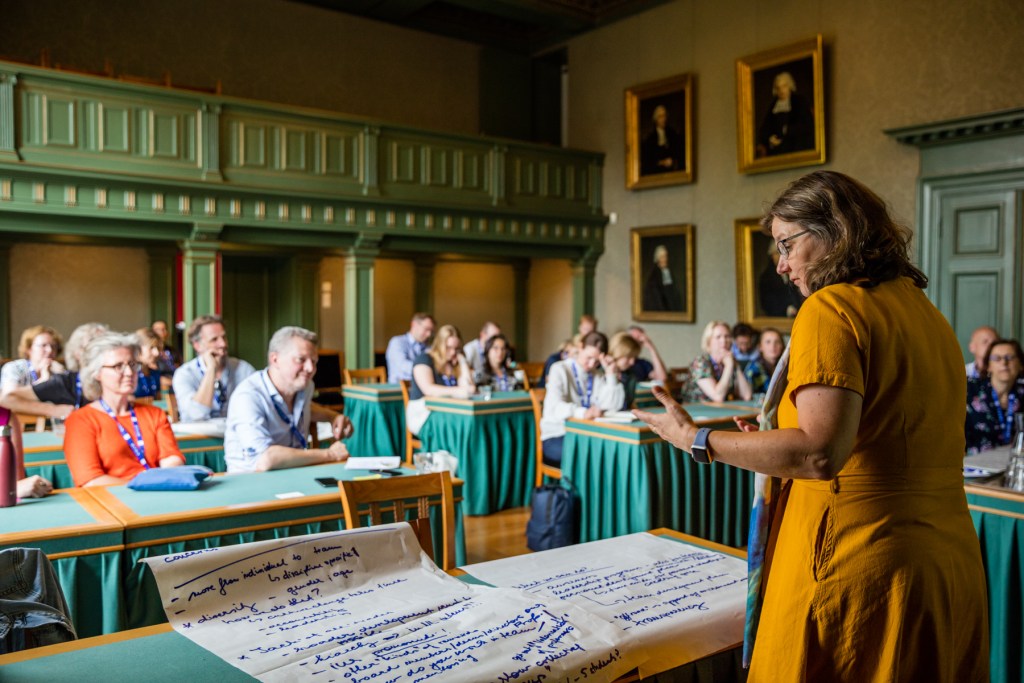
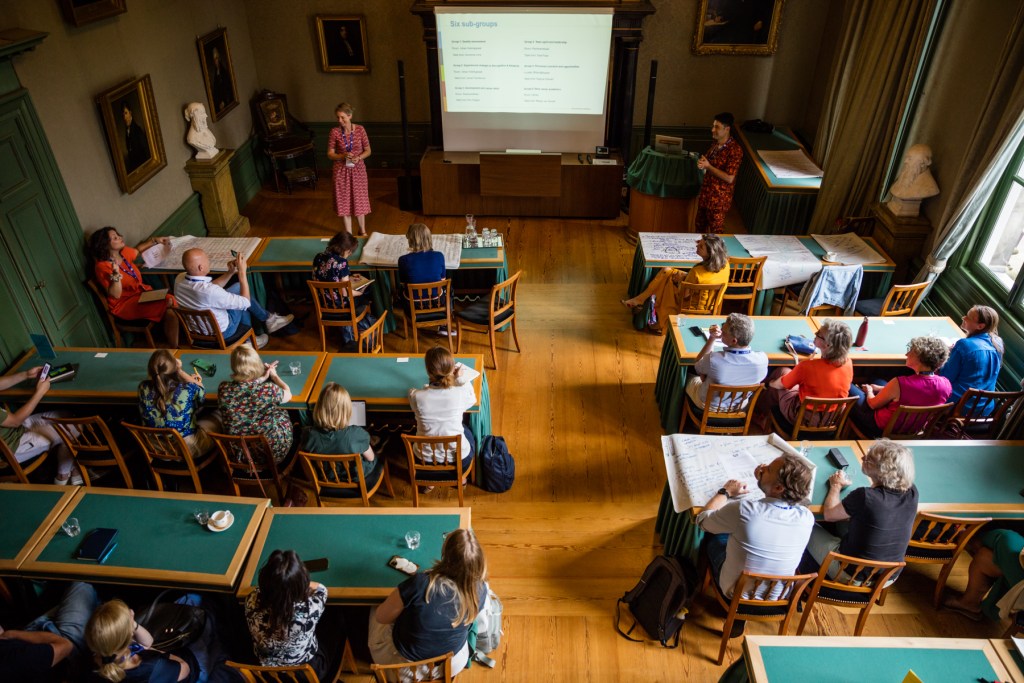
by To kick-off the new academic year, a vivid dialogue was organised on 29th of August 2024 at the Trippenhuis in Amsterdam. We invited academics from all over the Netherlands to participate in this dialogue. Around 40 participants with various backgrounds discussed and shared their thoughts, experiences and insights on Recognition & Rewards, drawing on the insights from the culture barometer survey, at six dialogue tables. The dialogue session was organised following the publication of the culture barometer results.
It is hard to reconstruct a complete and vivid dialogue session on paper, but we make an attempt by extracting some of the highlights. Please know that this report is not exhaustive and it represents ideas and perspectives of participants.
29 august, Trippenhuis Amsterdam
The session and this report are a jointly effort of Marjan van Hunnik, Giovanna Lima, Jeroen Sondervan, Kim Huijpen, Sanli Faez, Dagmar Eleveld, Claartje Chajes and Thomas van Rest. The photos were taken by Thomas Huisman.
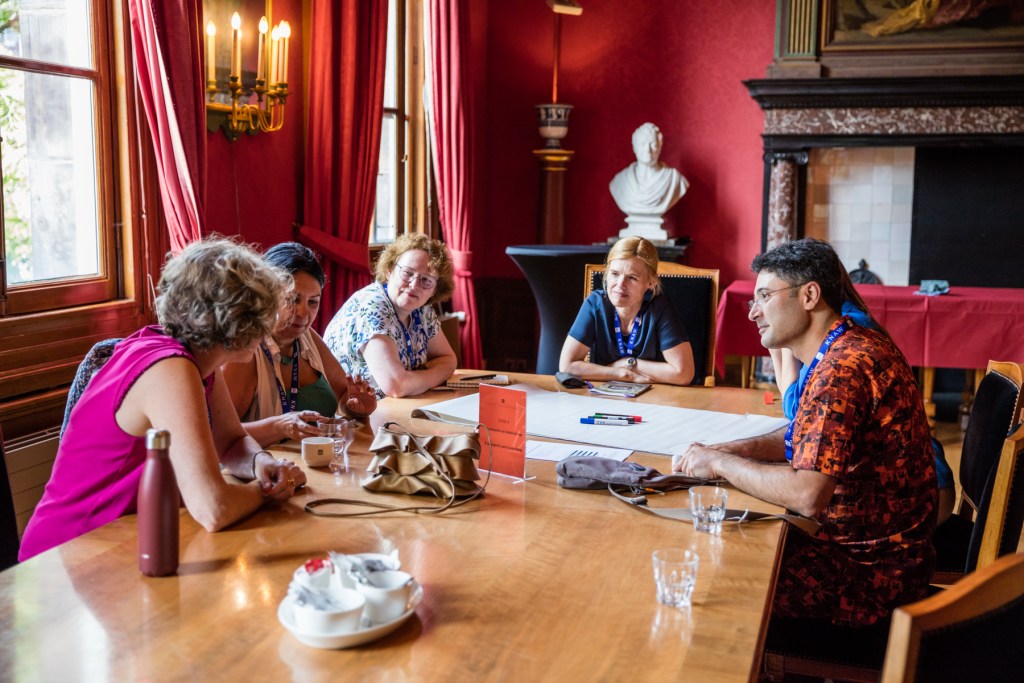
Team science
In the discussion on team science, team performance and team spirit a clear statement was made:
“No interdependence, no team”
For people to contribute to the goals of their team, their personal activities should be consistently interwoven to the results achieved by the team. Team performance is not just an algebraic sum of the individual achievements. For this coherence to be followed by all team members, it is important that the vision and performance agreements of the team are transparently shared and transparently evaluated. It therefore helps a lot if external evaluators do not micro-interject and evaluate the team *as a whole entity*. The rewards and support, e.g. grants, prizes and equipment, should then be visibly allocated to the team, not to individuals.

In the dialogue, it was emphasised that in a well-performing team there should be opportunities for the diversity of skills and personalities that are required for the goals of the team. Each of these contributions should be valued and rewarded. While the bigger organisation is always responsible for social safety and thriving of every individual in the team, it is counterproductive for the development of the team if these contributions are broken to elementary pieces, individualized, externally or internally and based on inflexible standard performance measures.
What is quality?
What is quality and how do you assess it? This question was addressed at another dialogue table. People joined the discussion from many institutions across the research and innovation system in the Netherlands: universities and research performing organisations like Leiden University, Erasmus MC and the VU, and ZonMw, KNAW, and CWTS. This broad range of perspectives led us to discuss many interconnected aspects of the definition of quality and its assessment.
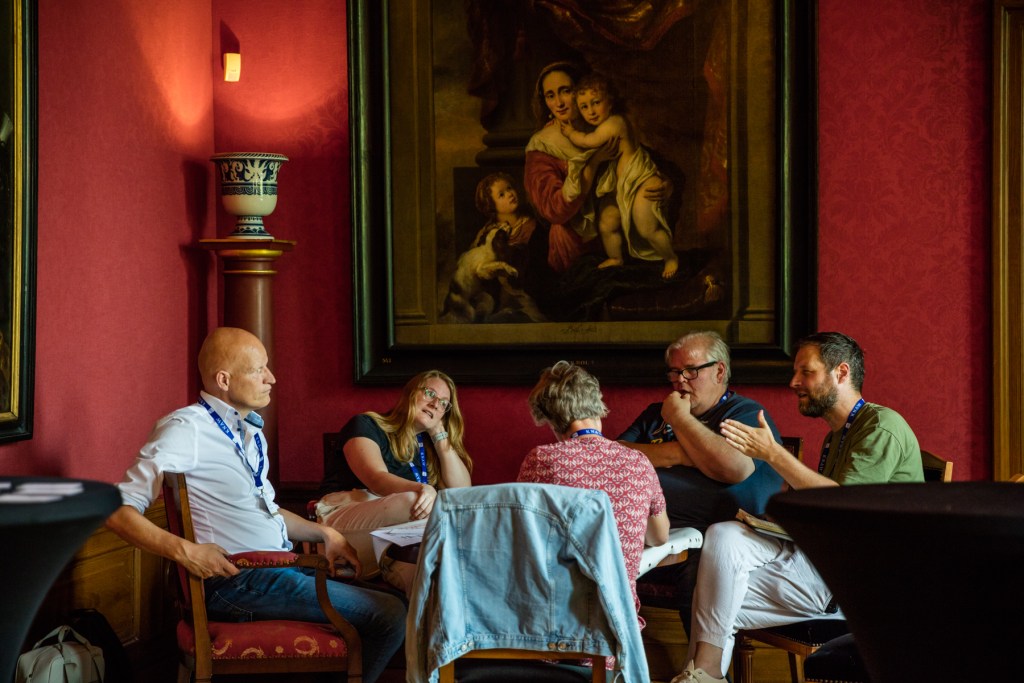
The definition of quality was immediately tied to the different disciplinary perspectives in both rounds of the discussion: in the first round, a colleague investigating quality indicators shared the different perspectives she had uncovered, while in the second round colleagues from the medical field and the humanities shared how even the process of peer review differed between their disciplines. The idea of having one broad framework for quality that crosses disciplinary boundaries was challenged. This specially holds true for those in interdisciplinary positions, hybrid and para-academic roles (such as learning innovators and data stewards), or researchers outside academia.
An inescapable question was: “What are you using the assessment for?”, which also led us to discuss at which level the assessment is and should be happening for different aspects of quality, like adoption of open science and acquisition of grants. On both rounds, we discussed the different nature of scholarly activities and how these activities could be compared in a quality framework: how can we have a quality check on an interview or editorial in a newspaper? Should this and how can this be compared to other scholarly outputs like peer-reviewed publications? This was particularly brought up in the second round, when we discussed how to understand and assess impact and engagement activities. The role of narratives was quite strongly associated with a solution for indicating quality (and relevance). But there was an overall sense that unfortunately metrics and ‘objective’ indicators take over when they are mentioned, even in narrative-based assessments.
The role of Committees – for awards, grants and promotion – were brought up and discussed, as they ultimately are the ones aligning practice with values, especially during this period of change. While some experienced that it is the qualities of the individuals and applications that are being assessed, some experienced that we are still deciding first and foremost on “scientific criteria” and then on everything else: we don’t yet know how to even define quality of teaching. While committees are being briefed about additional criteria for more dimensions, the diversification of committee membership was also discussed as a potential way forward.
Experienced changes in Recognition & Rewards
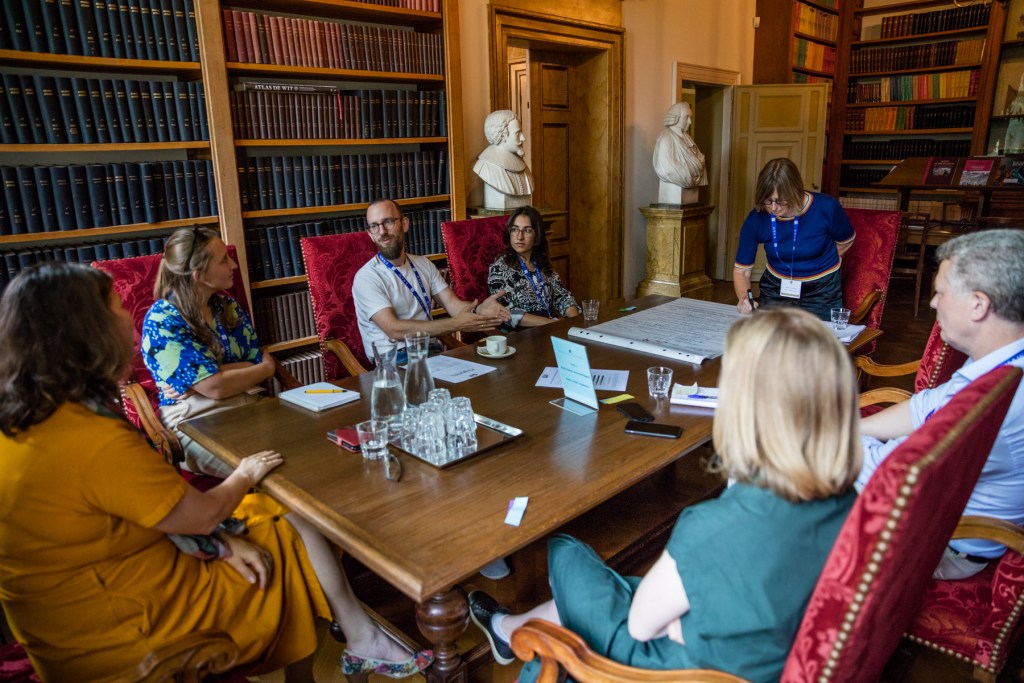
While discussing the subject ‘Experienced changes’, most participants were not really surprised by the fact that a majority of respondents have indicated that they are not aware of (or have noticed) much change in Recognition & Rewards. In the institutions there seems to be a lack of (corporate) communication about developments and therefore the discourse is not always aligned with practice. For people it is not always clear what Recognition & Rewards means for ‘me’ as an individual and as being part of an organisation.
In that respect, the following suggestion was interesting:
“Give the communication departments more ownership and agency.”
An important task for communication professionals is to work on the narrative and the management of expectations. How can communication help to make Recognition & Rewards developments relevant for individuals? How do implementations positively affect and have an effect on daily work (practices)?
Another aspect mentioned during this discussion was the subject of ‘hidden powers’. No formal hierarchy, but existing and influential roles and ways of working. We all know that hidden power mechanisms in academia can have quite negative effects on Recognition & Rewards reforms. We need to be creative in making these mechanisms more open and transparent.
Perceived Concerns and Opportunities Regarding the Effects of Recognition & Rewards
If we move over to another table, we notice two main concerns and corresponding opportunities that were on the table:
- Diversity: This concern extends beyond just gender or age diversity, encompassing a broader sense of diversity within teams. The opportunity here is to strengthen leadership and shift from an individualistic approach to a team-oriented effort. However, it was acknowledged that this can vary by discipline and that culture change requires time.
- Jack-of-all-trades: This was discussed as a concern, particularly in relation to the hierarchical structure within Dutch academic institutions. At the table, the following opportunities were immediately discussed: developing a broader system of recognition and rewards, emphasizing development over appointments, focusing on team dynamics to showcase the team portfolio, and valuing contributions from all academics, not just professors. For example, questioning why only full professors can hold certain leadership positions (ius promovendi) or become department heads or directors.
(How to involve) Early Career Academics
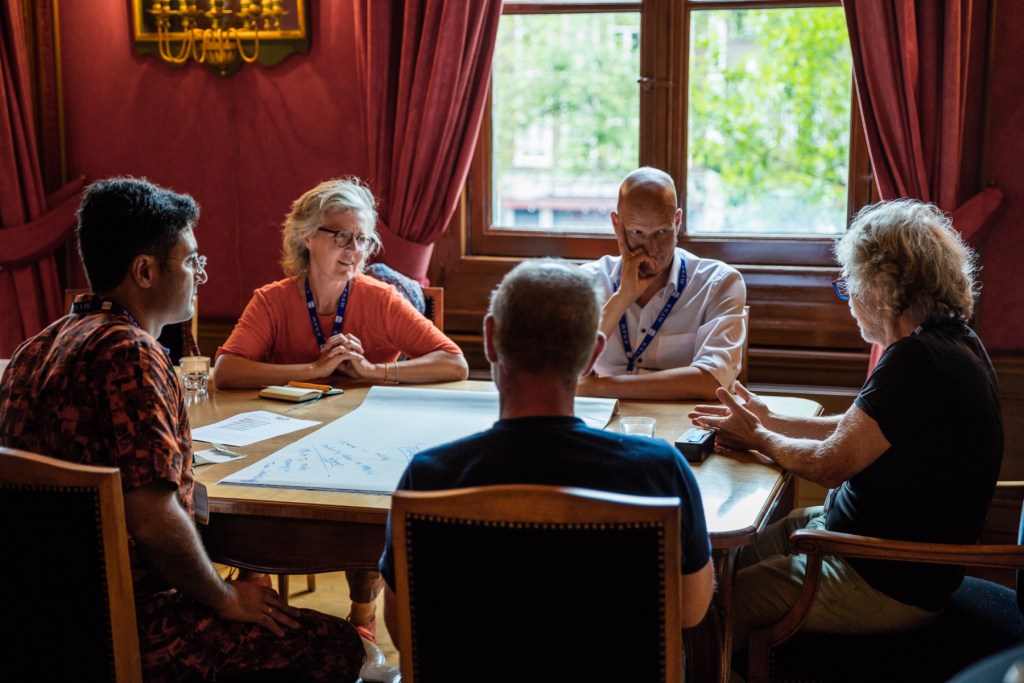
More than any other academic function group the early career academics experience the consequences (and uncertainties) of the transitional period we are in.
- They have a temporary contract and there is not always recognition for other things than what they are hired for.
- Even within the Netherlands with one Collective Labour Agreement and one National Recognition & Rewards Programme, there are differences between demands and criteria posed upon early career academics.
- Policy and paper are patient, but there is a lack of transparency when it comes to the financial and hierarchical reality.
So where did the participants see opportunities and dreams for the better future of early career academics?
- We should stalk the middle-management glass ceiling to improve the above-mentioned concerns;
- Make the narrative very explicit for all middle- and higher management: “Wake up, science has changed, let’s recognise and reward the changes that have already taken place!”;
- To policy makers: be sure there are more freedoms than requirements for academics, so that they can develop themselves ánd their work;
- To the highest management: Be reliable. Reliability is key!
Development and career steps
According to a large majority of the Recognition & Rewards Culture Barometer respondents, their ambitions are taken into account when work arrangements are made. However, a large proportion of respondents (almost three-quarters agreed or completely agreed) feel that they have to be good at all the various areas in their work. This highlights the need to diversify and vitalize career paths. A core ambition of our programme is to relieve academics from the expectation of excelling in everything at once. In our view, this diversification should also be reflected in assessment methods. Additionally, there is broad support among academics for placing more emphasis on tasks in teaching, leadership, impact, patient care, teamwork, open science, and open education.
During the dialogue on development and career steps, the discussion was firstly focussed on what is essential for achieving personal ambitions in an academic career. Where do we already see examples of a focus on development rather than assessment? Participants reviewed specific examples, discussing what drives their success and which factors contribute.
Here are some noteworthy cases:
- Leaders with leadership styles centered on development, encouraging team members to seek feedback. Trust and open relationships between supervisors and PhD candidates are key.
- PhD supervisors who encourage the development of competencies beyond research skills. Providing PhD candidates with a range of options to choose from contributes to the success of this approach.
- Faculty-level dialogues about career paths that bring visibility to different trajectories. Questions like, “Should everyone aspire to become a professor?” and “What are the possibilities for horizontal development?” foster openness. This enables assistant and associate professors to express their preference for staying in their roles, which should be seen as perfectly acceptable.
At the table the participants also agreed that developing leadership competencies shouldn’t be treated as a tick-the-box exercise.
In the second group, the conversation deepened. A tension was noted for PhD candidates between the pursuit of a research degree and the development of a broader skillset. Another excellent example emerged:
- A department with six vacancies discussed which profiles were needed to fill competency gaps in the team. Instead of hiring individually for each vacancy, they brought in a more diverse group of six hires than they would have otherwise.
“We need the courage to shift the narrative around academic careers.”
Senior staff, supervisors, and leaders in academia must acknowledge that only a small percentage of PhD candidates will ultimately become professors. It’s time to reframe academic careers—from “leaving academia” to recognising the vast array of great jobs available to the majority. In practical terms, supervisors should encourage PhD candidates and postdocs to pursue courses on transferable skills and those that prepare them for careers beyond academia.
On June 20, the results of the first Recognition & Rewards culture barometer, which was conducted among over 65,000 academics from 26 different institutions, were presented. The results provide insight into how the ambitions of the Recognition & Rewards programme and related behaviour are being recognised, shared, and perceived in policy and day-to-day actions. With this dialogue session, we wanted to further discuss and deepen the results. Dialogue is at the heart of the Recognition & Rewards programme. We strongly believe that broad dialogue is needed to be able to move forward with this culture change. Are you keen to organise a dialogue? Have a look at our dialogue toolkit, which will guide you through the relevant points you need to consider during your preparations. You will also find a number of handy tools for making choices.
Leave a Reply