Page 5 of 29

Recap Recognition & Rewards Festival

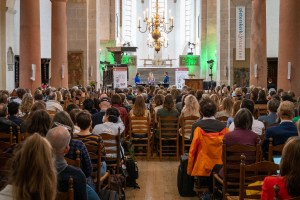
On Friday 8 November the fourth Recognition & Rewards Festival took place at the Mauritskazerne in Ede. Some 200 participants joint a varied programme around the theme ‘Developing diversified and talented teams’. We were delighted to welcome a diverse audience, including early career academics, deans, policy advisors and HR directors. We look back on an inspiring day with engaging panel discussions, interactive workshops and, of course, connecting and dialogue. 

Plenary opening 

The day was under the leadership of Jasmijn Mioch. As moderator, she opened the festival with some reflective questions. Participants were invited to reflect on the teams they are part of and which of those they find most rewarding. It turned out to be a good start to the dialogue. This was followed by a conversation with Jeroen Geurts (co-chair of the national steering group Recognition & Rewards), Kim Huijpen (national programme manager Recognition & Rewards) and Benthe van Wanrooij (chair of Promovendi Netwerk Nederland) about their thoughts on the theme and their expectations of the day. All three emphasized the importance of team collaboration. ‘A team is like an orchestra’, says Huijpen. ‘Every musician has a different talent and plays a different instrument. Playing in an orchestra is also about listening to each other and making sure that the person next to you will be heard. Together, the orchestra plays very beautiful music.’  

Column 

Following this opening, Karen Stroobants (vice chair of the Coalition for Advancing Research Assessment) was invited to deliver a column. She championed the proposition that a team is more than the sum of its talents. In her column, she speaks about ‘the sum+ team’. Such a team resembles an orchestra or a football team, and has two characteristics. On the one hand, this team consists of a diversity of profiles that complement each other. On the other hand, it is steered by a manager or leader who thinks strategically about talents, competences and backgrounds that are required to form the sum+ team and bring the team together around a common goal. The success of a team is often associated with its coach. Building on these two key characteristics, Stroobants finished her contribution with three concrete suggestions for people who are responsible for recruitment, development and fostering of teams. Firstly, she noted that funders, institutions and departments should give more weight to people management competencies of the team leaders they hire, promote and fund. Where management competences are required to deliver in a role or project, this must be reflected in funding and promotion criteria. In addition, she recommended that funders, institutions and teams stop desiring the ‘jack-of-all-trades’. Finally, she advised that actors reflect on what is appropriate to assess at the individual and what is arguably better evaluated at the level of the team.   

Panel discussion 

The third part of the programme featured a panel discussion. Sanli Faez (board member of The Young Academy) and Sean Sapcariu (programme manager at the Luxembourg National Research Fund) had a dialogue about assessing research performance and using narrative CV’s. Sapcariu is a warm advocate of the narrative CV. In his eyes, this is a tool that brings focus and consistency to recognising a broad range of achievements. Faez, however, was critical of its application in appointment committees: ‘A narrative CV gives a very limited aspect of the candidate. It is a very promise-based system and not a track record-based system. You don’t look at who has really delivered in the past on the promises or has done something that other people respect. The idea of committees is a steel in the optimalization of the system, and that’s why a lot of evaluations fail.’ Sapcariu countered that all is about trust. ‘We give money as an investment in ideas. Past success is not a guarantee for success in the future. It’s about good ideas and good teams.’   

Later in the session, Gunther Cornelissen (academic director Mathematical Institute) and Renske Bouwer (associate professor in Language & Education) discussed team diversification. Cornelissen advocated for less evaluation and more recognition. Asked how to achieve this, he suggested: ‘Fewer steps in academic careers.’ Bouwer described herself as ‘a diversified person in herself’, combining various tasks and thriving in this multi-faceted role. However, she acknowledged that not everyone feels the same way and stressed the need to balance roles in research, teaching, and societal impact. ‘We need to find a way to balance the different roles in research, education and impact’. At the same time, the focus for many academics is on education. So, education deserves more recognition and rewards. It is crucial that people share positive stories about education. Thus, in her team the lab meetings for research are combined with the meetings on education: ‘We make room for people to bring in inspiring ideas related to both research, impact and education. Then you recognize all the different roles’. 

The panelists concluded the conversation with a one-liner. What do you like the audience to remember from this panel conversation? Sapcariu answers: ‘Use the right words to change culture.’ For Faez the message is: ‘Speak up!’ Cornelissen wants to emphasize that working in teams makes you happy. Bouwer points out the importance of integrating the multiple roles of research, education and impact within the teams.  

Workshops 

After this plenary part of the programme, two rounds of workshops took place in breakout rooms. Participants had the opportunity to join two workshops best suited to their interests. With twenty diverse sessions on offer, there was plenty to choose from. From pub quiz to serious game, and from building a talented team to reflecting on the recognition structure for individuals and teams. For this edition of the Recognition & Rewards Festival, we specifically invited various groups. Therefore, some workshops had also been organised for specific target groups, such as early career academics, committee members involved in promotion and appointments, and academics in leadership positions. 

Team note 

In the afternoon, the plenary programme turned to an international perspective. In a team note, three colleagues from Newcastle University presented how the developments around ‘Research culture’ in the United Kingdom relate to diverse and talented teams. Similarly to the Netherlands, improving research culture is high on the agenda for universities and research organisations in the UK. Candy Rowe, dean of Research Culture and Strategy at Newcastle University, described how a Wellcome Trust survey into experiences of thousands of researchers gave a strong evidence base for change of research culture. Rowe states that ‘Although the phrase “Room for everyone’s talent” is not widely used in the UK, we talk about something very similar. About it being important for diverse contributions to be valued and recognized.’ 

Closure 

Mioch closed the festival by interviewing Kim Huijpen. As programme manager, what does she take away from the day? Her conclusion is short and sweet: ‘It’s all about words. I learned a new word or actually a new phrase today in a workshop. It is “diversity discomfort”. The idea is to sit with your discomfort because that enhances learning. Further, I hope we can express our recognition to each other and support each other in changing recognition and rewards in academia.’   

It was again a successful Recognition & Rewards Festival, full of interaction and inspiration. We extend our heartfelt thanks to all speakers, panelists and workshop leaders for contributing to the programme. We very much appreciated the active participation of all the participants. We are looking forward to follow-up on all the interesting dialogues together. 

Please have a look at the aftermovie, the photos and the recordings of the plenary sessions as well:

Have a look


The bio-sketch: room for more than research, with a personal focus

TU/e takes the next step in Recognition and Rewards

September 4, 2024
Source: website TUe/by Birgit Span

Starting in September, scientists will write a biographical sketch when taking a step in their career.

Photographer: Vincent van den Hoogen


From September onward, TU/e scientists will be required to write a biographical sketch as they climb the academic career ladder, reflecting on themselves and their vision in education, research, leadership, and impact. “This provides a nice basis for discussing where you want to go as an academic.”


It all began with a pilot at the departments of Mechanical Engineering and Industrial Engineering & Innovation Sciences, but the biographical sketch – also known as the bio-sketch – has now been rolled out TU/e-wide. This is a new tool developed by our university for assessing and recognizing scientists differently, thanks to Recognition and Rewards.

Five A4s of vision

Starting in September, the university asks scientists who want to step up the academic ladder to write a bio-sketch in preparation for the ‘job interview’ with the Assessment Committee (benoemingsadviescommissie, BAC).

Candidates use this to reflect on themselves, writing a statement regarding education, research, leadership, and impact and how their time is divided across those domains. And all that within a maximum of five A4s.

prof. Harald van Brummelen, TU Eindhoven. Photographer: Bart van Overbeeke

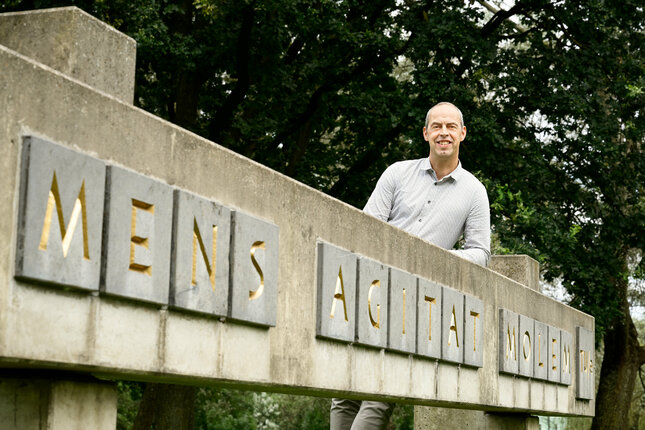
Professor Harald van Brummelen is the chair of the permanent Assessment Committee (benoemingsadviescommissie, BAC) of his department of Mechanical Engineering. In this position, he has overseen more than 30 BACs over the past year, during which the candidates used bio-sketch to showcase themselves.

In addition, as the chair of the Engineering Interdepartmental Committee (interfacultaire commissie, IFC), he was closely involved in developing the biographical sketch by Human Resources Management.

What will change with the introduction of the biographical sketch?

“It primarily changes how our scientists can present themselves. In the context of their field, we ask them to showcase themselves with a well-substantiated profile that includes a vision of education, research, impact, and leadership. A fact sheet supports this. ‘This is my position, and this makes me unique. This is how I stand out. And I have this track record to back that up,’” outlines Van Brummelen.

In Van Brummelen’s experience, “scientists who, in particular, want to profile themselves a little more broadly than in just the research field can use the bio-sketch to express themselves. It provides a nice basis for the conversation on where you want to go as a scientist and how you contribute to TU/e.”

Valuable tool

“Instead of simply looking at numbers and the past, how much you’ve published, and your H-index, look at the person. How can you use what you’ve done for your future? Nice that you wrote a paper, but what does it mean for you as a scientist? What direction do you want to take with it? That makes the bio-sketch an enormously valuable tool.”


‘Thanks to the bio sketch, I can show how I add value’

Ramiro Serra experiences the biographical sketch as a big step forward in career development. He was promoted to associate professor-1 at the department of Electrical Engineering. For that assessment interview, he used the biographical sketch to define to which extent he wanted to be rewarded for his teaching and educational efforts, research achievements, and his performance in leadership and impact.

Ramiro Serra is a researcher at the Electrical Energy Systems group. He was among the first in his department to use the biographical sketch for his Assessment Committee (BAC) interview.

In the biographical sketch, scientists reflect by category (research, education, leadership, and impact) on what they have done in the past. And describe a vision for themselves in the future. “For me, that offered advantages because I’m not the archetype researcher,” Serra says. He’s a passionate teacher and educational innovator in addition to his research. “But it’s harder to get proper credit for that.”

Click here to read Ramiro’s full story

Associate Professor Ramiro Serra, Electrical Energy Systems, Electrical Engineering, TU Eindhoven

How is a BAC session different with the bio-sketch?

Van Brummelen: “Candidates can expect more questions about their motivation. We want to know what they do, but mostly why they do it. Why did you make that choice? How did you arrive at it? What choices do you still want to make?”

Van Brummelen notes that not everyone has been equally successful in strategically positioning and presenting themselves. “With Recognition and Rewards and the bio-sketch, we are looking more for the personal motivation of our scientists. For some, that may be pure curiosity; for others, an intrinsic desire to solve specific problems. We want to provide more scope for that.”

We want to know not only what scientists do but especially why they do it.

Harald van Brummelen, chair of the Engineering Interdepartmental Committee

How have scientists responded to the bio-sketch?

“There is sometimes a bit of reluctance. Some colleagues might feel like they have to jump through another hoop. They’ve just written a research statement for their previous BAC, and now we’re asking for something different with the bio-sketch. It’s a change process that takes time, but I believe it will be better in every way than before.”

Van Brummelen considers it essential that the biographical sketch not disappear back into a drawer until the next BAC arrives. “This should become an integrated part of our university’s career policy. It is not a snapshot but an ongoing process regarding where you are and where you want to go.”


‘Reflecting on what I’ve achieved and what my ambitions are is really useful’

At the end of 2023, Karin Smolders presented her biographical sketch to the Assessment Committee (BAC) as part of her promotion process to associate professor 2 (UHD2).

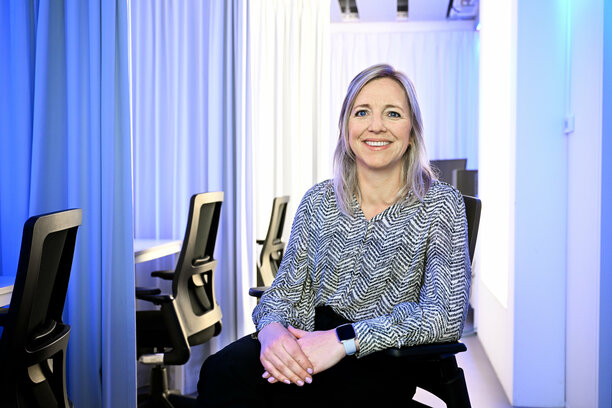
Associate professor Karin Smolders works in the Human-Technology Interaction group within the Industrial Engineering & Innovation Sciences department. She has a background in chronobiology, psychology, and data science, and she is interested in how we can best use technology to monitor and manage health. Her research focuses on the impact of lighting technology on human well-being, health, and performance.

Since February 2024, she’s been appointed UHD2. She wrote a biographical sketch to prepare for the necessary BAC interview, highlighting her achievements and ambitions. Her bio sketch outlined how she wants to allocate her time and focus between research, education, impact, and leadership.

She spends about 50% of her time on teaching, 40% on research, and 10% on impact. “It wasn’t easy to make that division because tasks are often intertwined, and the division typically varies across quartiles. This is the default, but adjustments are possible,” adds Smolders.

Karin Smolders in LightLab, IE&IS, TU Eindhoven

What does the bio-sketch change for members of appointment advisory committees?

“It requires a different mindset. Most BAC members have grown up in a traditional system where the emphasis is on research output. That’s no longer the only thing we evaluate because people can also position themselves on education, impact, and leadership.”

prof. Harald van Brummelen, TU Eindhoven

There is more room for new directions. We all have to get used to that.

Harald van Brummelen, chair of the Engineering Interdepartmental Committee

“The members of the BACs also need to get used to people having more freedom of movement and learn how to assess scientists with broader profiles.”

Human Resources Management has developed examples for the members of the BACs. “These are very valuable to us, and I see growth in the BACs,” says Van Brummelen.

“We have gained experience thanks to the Mechanical Engineering and Industrial Engineering & Innovation Sciences pilots. This also broadens our assessment framework. Reflection on how a session went is helpful for the next one, even if the candidates are very different.”

Flipping the switch

“The members of the interdepartmental committees, in particular, accumulate a lot of experience because they often participate in BACs in different departments and disciplines. We could make some more use of that experience.”

Van Brummelen sees that scientists also have to get used to the fact that more diverse career paths are possible thanks to Recognition and Rewards. “You can’t just flip the switch and say, ‘We’re all going to do things differently.’ It’s a culture shift. They have to get used to being given more scope.”


‘The beauty of the bio sketch is that you can make it very personal’

Researcher Maja Rücker appeared before the Assessment Committee (BAC) in the spring of 2023 for her promotion to assistant professor-1 (UD1). She participated in the pilot at Mechanical Engineering to use the biographical sketch for this purpose.

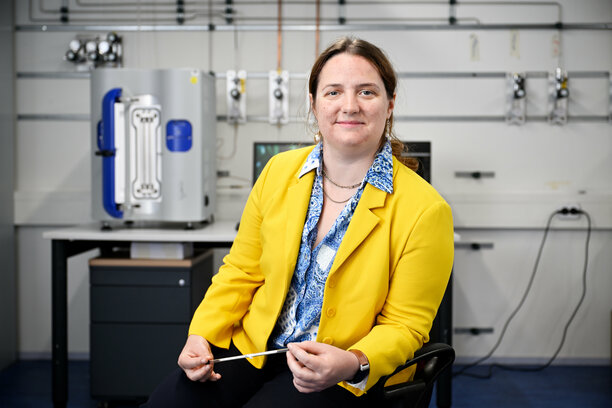
Since 2020, Maja Rücker has been researching porous materials at the Department of Mechanical Engineering. In her biographical sketch, Rücker emphasized research, leadership, and diversity.

“I especially want to focus on research because that’s where my heart lies. I thrive on my research on porous materials. In my biographical sketch, I wrote how I aim to solve challenges in my field in the future. Such an outlook is difficult to convey in a curriculum vitae. The bio sketch provides space for your ambitions and perspectives on your work and yourself. It goes beyond evaluating based on hard criteria such as the number of publications.”

In her bio sketch, Rücker also wrote about her activities that addressed diversity. She started working at TU/e four years ago, thanks to the Irène Curie Fellowship program. In that program, female scientists are given priority when filling vacancies.

Click here to read Maja’s full story

asst. prof. Maja Rücker, Energy Technology, Mechanical Engineering, TU Eindhoven

What surprised you the most during BAC sessions where the candidates presented themselves using a bio-sketch?

Van Brummelen: “I’ve seen young people who set out very clear profiles of themselves, which I consider very impressive and central to such a session. The ‘why’ is at the core. Try to work from a strategic core on why you do something or want to do something and less on the execution and how you want to do it.”

As chair of a BAC, Van Brummelen always has a brief conversation with the candidate after the session. “BAC members have enormous experience and can provide useful recommendations and insights. That is often appreciated.” In his experience, this also fits perfectly with the approach of the bio-sketch. “The conversation is more about people than a long list of numbers of what they have accomplished. I find that very valuable.”

Recognition & Rewards Festival 2024

We are very much looking forward to our next Recognition & Rewards festival. This vibrant event will be held on the 8th of November, 2024 (09.30 – 17.00h) at the Mauritskazerne in Ede (Within walking distance of station Ede-Wageningen). We are very happy to welcome you to participate in the festival.

You can now sign up for the festival and select two workshops of your preference.

    Sign up   

This year the Recognition & Rewards Festival’s theme is ‘Developing diversified and talented teams’ (Read more).

During the Recognition & Rewards Festival, we will zoom in on this. We will focus on a team-oriented mindset and concrete tools to put Recognition & Rewards into practice within teams.

Workshops

Out of the many proposals we have selected 20 workshops to be organised during the festival. The workshops will specifically address the festival’s subject matter of developing diversified and talented teams. For example, there are workshops discussing how participants can open-up the conversation about team-based working within their department, research groups etc. and how to think about talents, development, ambitions, competencies and complementarity instead of the single focus on skills or outputs that people already have on an individual level. With workshops on recognising diverse PhD trajectories for example, we certainly want to involve early career academics as well.

We also look at what role leadership plays in academic teams. And what leadership means for talent selection, assessment and development. Participants will gain an understanding of the function of inclusive leadership in fostering diverse teams. They will learn practical strategies for effectively recognising and rewarding diverse talents, ultimately enhancing their ability to implement inclusive leadership practices within their teams.

You can indicate your choice of workshops in the registration form. More information on the workshops can be found on the website. Keep an eye on the website for updates on the programme.

    Sign up   

———————————————

For this edition of the Recognition & Rewards Festival, we want to specifically invite various groups. The first of these are early career academics for whom Recognition & Rewards will have the greatest impact on their own careers. The second group are committee members involved in promotion and appointments (such as from researcher to Assistant Professor to Associate Professor and Associate Professor to Full Professor). As a third group, we like to invite academics in leadership position. Think of heads of a department, institute or research group. In addition, we also like to invite the support staff of these target groups, for example secretaries of appointment advisory committees and HR advisors, but also, for example, grant advisors who advise early career academics or secretaries of graduate schools who are involved in PhD policy. 

The festival is organised by the Recognition & Rewards Programme, a partnership between the Royal Netherlands Academy of Arts and Sciences (KNAW), the Netherlands Federation of University Medical Centres (NFU), the Ideologically Based Universities (NLU), the Dutch Research Council (NWO), Universities of The Netherlands (UNL) and the Netherlands Organisation for Health Research and Development (ZonMw) with funding and support from the Ministry of Education, Culture and Science.

We hope you are enthusiastic to participate and share your perspective, allowing us to shape and implement the next steps of the Recognition & Rewards programme together.

Invitation: Recognition & Rewards Festival 2024

We are very much looking forward to our next Recognition & Rewards festival. This vibrant event will be held on the 8th of November, 2024 (09.30 – 17.00h) at the Mauritskazerne in Ede (Within walking distance of station Ede-Wageningen). We are very happy to welcome you to participate in the festival.

You can now sign up for the festival and select two workshops of your preference.

    Sign up   

This year the Recognition & Rewards Festival’s theme is ‘Developing diversified and talented teams’ (Read more).

During the Recognition & Rewards Festival, we will zoom in on this. We will focus on a team-oriented mindset and concrete tools to put Recognition & Rewards into practice within teams.

Workshops

Out of the many proposals we have selected 20 workshops to be organised during the festival. The workshops will specifically address the festival’s subject matter of developing diversified and talented teams. For example, there are workshops discussing how participants can open-up the conversation about team-based working within their department, research groups etc. and how to think about talents, development, ambitions, competencies and complementarity instead of the single focus on skills or outputs that people already have on an individual level. With workshops on recognising diverse PhD trajectories for example, we certainly want to involve early career academics as well.

We also look at what role leadership plays in academic teams. And what leadership means for talent selection, assessment and development. Participants will gain an understanding of the function of inclusive leadership in fostering diverse teams. They will learn practical strategies for effectively recognising and rewarding diverse talents, ultimately enhancing their ability to implement inclusive leadership practices within their teams.

You can indicate your choice of workshops in the registration form. More information on the workshops can be found on the website. Keep an eye on the website for updates on the programme.

    Sign up   

———————————————

For this edition of the Recognition & Rewards Festival, we want to specifically invite various groups. The first of these are early career academics for whom Recognition & Rewards will have the greatest impact on their own careers. The second group are committee members involved in promotion and appointments (such as from researcher to Assistant Professor to Associate Professor and Associate Professor to Full Professor). As a third group, we like to invite academics in leadership position. Think of heads of a department, institute or research group. In addition, we also like to invite the support staff of these target groups, for example secretaries of appointment advisory committees and HR advisors, but also, for example, grant advisors who advise early career academics or secretaries of graduate schools who are involved in PhD policy. 

The festival is organised by the Recognition & Rewards Programme, a partnership between the Royal Netherlands Academy of Arts and Sciences (KNAW), the Netherlands Federation of University Medical Centres (NFU), the Ideologically Based Universities (NLU), the Dutch Research Council (NWO), Universities of The Netherlands (UNL) and the Netherlands Organisation for Health Research and Development (ZonMw) with funding and support from the Ministry of Education, Culture and Science.

We hope you are enthusiastic to participate and share your perspective, allowing us to shape and implement the next steps of the Recognition & Rewards programme together.